Hayes Valley was once considered one of the most dangerous neighborhoods in San Francisco. Following
changes in urban planning following the 1989 Loma Prieta Earthquake and broader economic trends, the
neighborhood began to gentrify into what is now one of the most affluent zip codes in the City.
Despite the status of the neighborhood and its residents, Covid and the government’s responses were devastating
to local businesses. In March of 2020, Mayor London Breed ordered all businesses to close for an indefinite and
extensive period which tested the ability of many local businesses to survive. The protests following the killing
of George Floyd and social unrest added an extra layer of tension to a world already on edge. Some businesses
were forced to close, others boarded their windows and many found ways to keep a heartbeat through the worst
of times.
Visiting Hayes Valley a year after the shutdown, you can witness both the ingenuity of businesses that have
adapted to a new way of life and see the economic scars of a global pandemic in “For Lease” signs littered
throughout neighborhoods like Hayes Valley. And yet, with the City closing streets to cars on weekends and
people getting vaccinated, the Hayes Valley you walk through today has just as much vitality as it did a year
ago, if not more, albeit masked, sanitized and socially distanced. Hayes Valley offers an intimate portrait of how
people’s lives were upended and transformed through a global crisis, and a testament to the creativity of the
business owners, old and new, who populate its storefronts, sidewalks and streets.
7/14
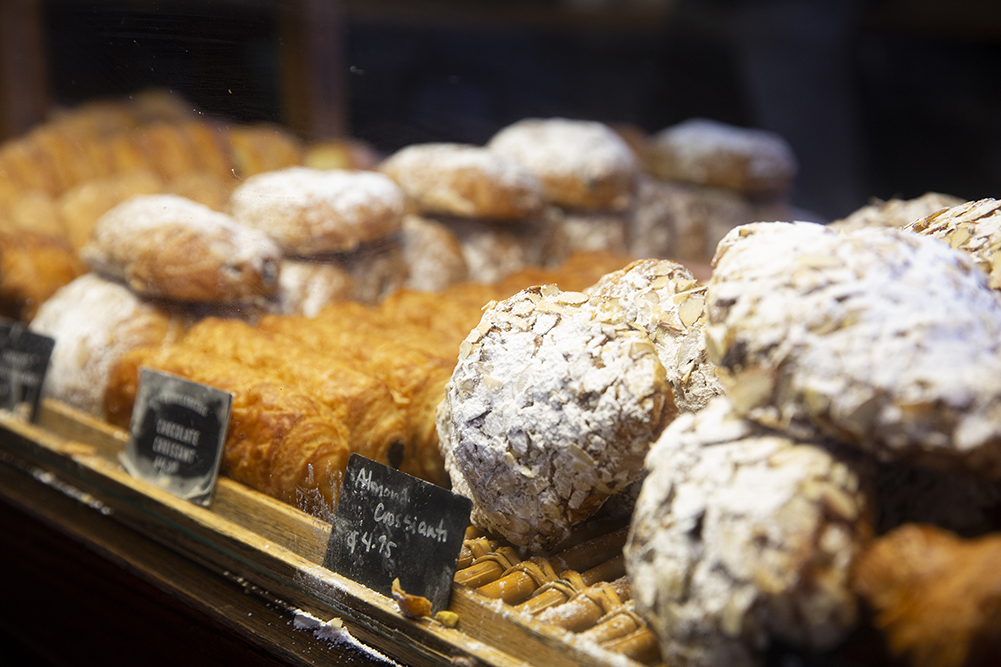
Jennifer Cosguen, 36, manager at La Boulangerie SF, is standing at the register to check out a long
line of customers waiting to get their bakery. “Everybody wants croissant toast and coffee everyday
no matter what.” April 11th, Hayes Valley, San Francisco.